Contact Us Careers
Lehe Popularization

How hard does the immune system work to eliminate tumor cells? Click to view the "life-and-death struggle" between the two

时间:2026-05-22 人气:
     
Click on the blue text above to follow us


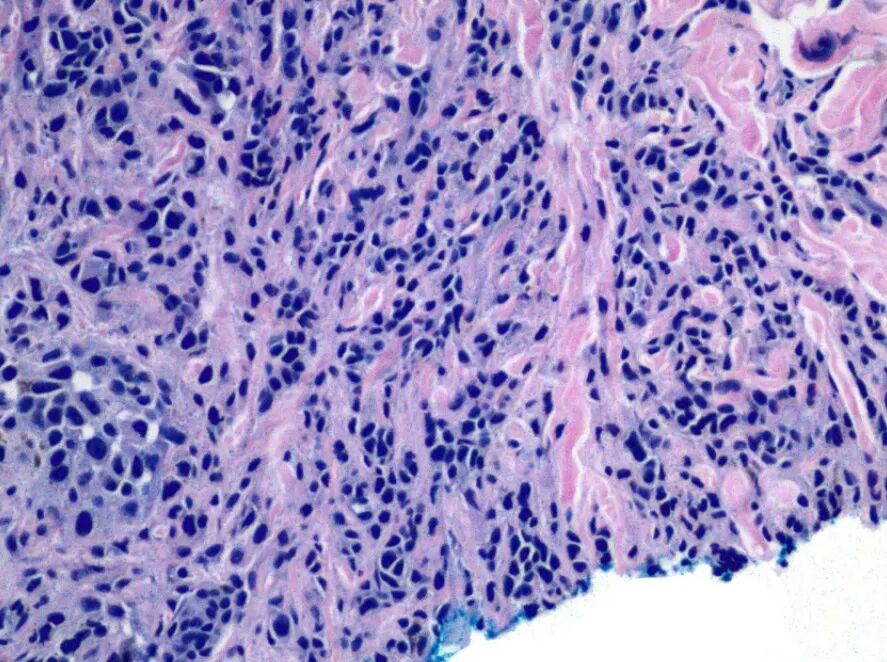
Numerous genes and environmental factors intertwine, jointly forming a breeding ground for tumors. Ultraviolet radiation, a common environmental factor in daily life, is one of the primary culprits posing a potential threat to melanocytes in the skin. Melanocytes, as the main producers of skin pigment, are prone to damage to their DNA and other key structures if exposed to ultraviolet radiation for a long time, which may subsequently induce melanoma, a highly malignant disease.      


Melanoma      


Once melanoma emerges, it acts like a cunning invader, proliferating unchecked within the body and using the river of life, the blood, to expand its territory to distant organs such as the liver and lungs, causing even more severe damage. At the same time, our immune system, like a tireless guardian, constantly monitors subtle changes in the body, ready to respond at any time.    

  
This is a silent yet fierce war - a life-and-death struggle between tumor cells and the immune system. The battlefield is complex and ever-changing, involving the precise coordination and confrontation of various immune cells and molecules, like a grand symphony where each note carries the weight of life and death.    


Cancer-Immunotherapy-2020-Calendar Cover image  


The initiator of war - tumor cells

     
popularization of science      

 
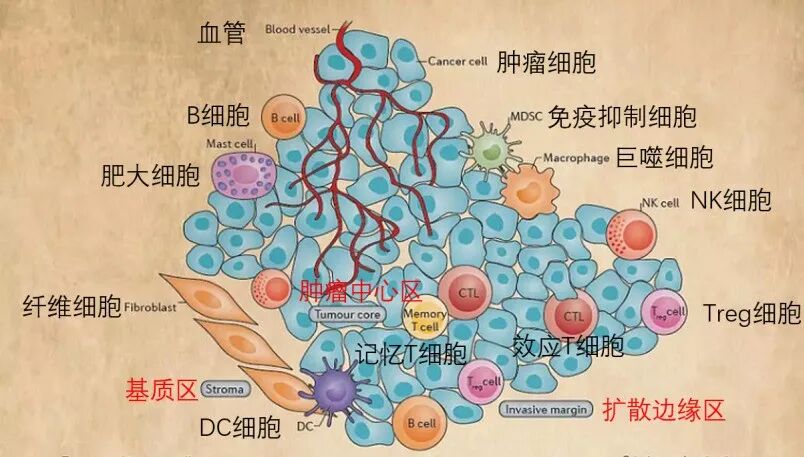
In this schematic image full of tension, a prominent blue block stands out, representing those cunning and tenacious tumor cells.  
These cells, like uncontrolled rebels, multiply recklessly within the body, surrounded by a ring of red vascular networks, as if providing an endless supply line for these "rebels". This symbolizes the potential for tumor cells to launch attacks on other parts of the body through the river of life, the bloodstream, achieving their "territorial expansion".


However, around this territory seemingly controlled by tumor cells, a fierce battle is quietly unfolding. A wide variety of immune cells act as loyal guardians, each performing different functions and closely united to jointly combat these uninvited guests. These immune cells are cleverly distinguished by different colors, with each color representing a unique power, and the clear labels on them are like medals, proudly displaying their names and functions.  


The Warriors of the Immune System

     
popularization of science      


The red CTL cells  are like fearless warriors, clad in heavy armor and wielding sharp swords, bravely charging forward to attack and eliminate infected or abnormal cells. Their eyes are firm and resolute, as if to say, "No matter how cunning you are, you cannot escape our pursuit!"  


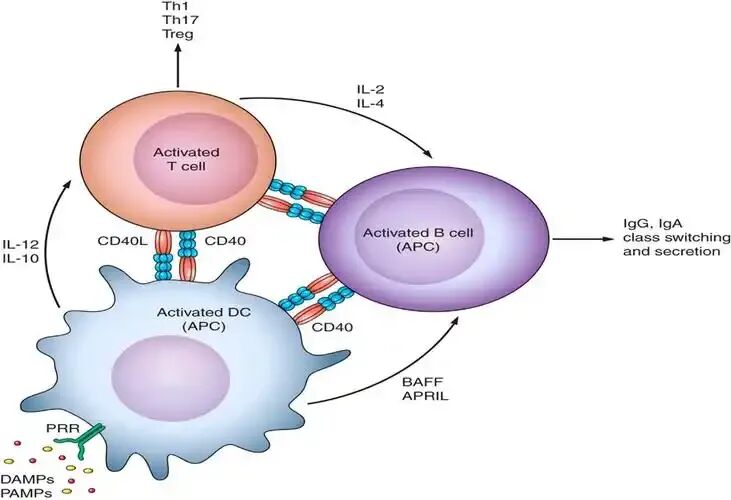
Yellow B cells  are like precise snipers, quietly observing the situation on the battlefield at the edge of the tumor. When they spot their target, they quickly produce antibodies, a deadly weapon. These antibodies, like precise bullets, can inhibit tumor growth under certain circumstances. At the same time, they can effectively present tumor antigens to corresponding T cells, thereby activating the T cell immune response.


Orange natural killer (NK) cells are like commandos on the battlefield. They move swiftly and are powerful, specifically targeting cells that have been infected or have become abnormal. Each of their attacks is like a bolt from the blue, demonstrating a shocking destructive power.  

 
Purple dendritic cells  are like commanders, standing at the heights of the battlefield and observing the situation with keen eyes. They are responsible for activating and regulating the entire immune response, ensuring that every immune cell can exert its maximum fighting power. They are like a wise general, using precise command and coordination to push this battle towards victory.  

 
Pink helper T cells also play a role in these responses. They assist dendritic cells in activating cytotoxic T cells, while also releasing cytokines such as gamma interferon to recruit more natural killer cells.  

 
However, in this battle, not all immune cells are allies.  

 
Green myelo-derived suppressor cells (MDSCs) are accomplices of tumor cells. They suppress the activity of T cells and NK cells, promote tumor angiogenesis, and provide strong support for tumor growth and metastasis.  

 
Professor Zhang Minghui's team discovered a type of immune cell not depicted in the imagevNKT cells, which are 7-8 times larger in volume than CTL cells and possess important characteristics of both NK cells and CTL cells. The cells store more cytotoxic enzymes inside (thousands of times more than NK cells and CTL cells).  

 
More importantly, vNKT cells can also regulate the microenvironment within cancer cell tissues, eliminate inhibitory immune cells MDSCs, and enhance the anti-tumor capability of the immune system.  


Key players in war

     
popularization of science      

 
In addition to immune cells, there are also some key molecules that play a crucial role in this battle. For example:

 
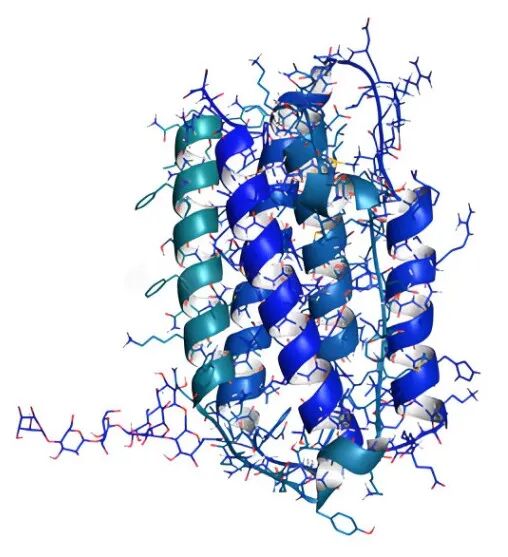
Tumor Necrosis Factor (TNF):It is a cytokine capable of inducing tumor cell death, secreted by immune cells.  


Interferon (IFN):Interferon can interfere with the replication process of viruses and also enhance the killing ability of immune cells.  

Interleukin (IL):Interleukins are a class of cytokines with broad biological activities, playing a crucial role in regulating immune responses, promoting cell growth, and facilitating differentiation.

Despite the powerful killing force of the immune system, tumor cells are not to be underestimated. They can resist the immune system's attack through mutations, evasion of immune surveillance, and suppression of immune responses. Furthermore, the growth and spread of tumor cells often outpace the immune system's response, making the outcome of the battle highly uncertain.

 
However, with the continuous advancement of science and technology and the innovation of immunotherapy methods, humans are gradually unveiling the mysteries of the struggle between tumor cells and the immune system. By activating immune cells, inhibiting the growth and spread of tumor cells, and regulating immune responses, we are hopeful of achieving more victories in the future battle.

 
In summary, the war between tumor cells and the immune system is a complex and delicate struggle. In this war, the warriors of the immune system have demonstrated fearless courage and powerful killing force, while tumor cells employ various means to counter the attacks of the immune system. Although the outcome of the war remains uncertain, humans are constantly exploring and innovating, hoping to achieve ultimate victory in this protracted war.  


Click on the image to view the exciting content from previous issues


Written by: Cao Tingting

Reviewed by: Qiao Jiacheng, Wang Ying, Gao Chen

Edited/typeset by: Zhang Jiao



Contact Us

Scan QR code

Communicate with Professor Zhang Minghui's team


Reposting is a driving force, sharing is a virtue