About Lehe
乐于心,和与众,与己乐,与人和; 心宽念纯,百病无生。


乐于心,和与众,与己乐,与人和; 心宽念纯,百病无生。


What should you do after being diagnosed with cancer?
Treatment! This should be the first choice in many people's minds.
But you may not know that after tracking and analyzing 10000 cancer patients13[1], there is alsoHabits can significantly reduce the risk of death by nearly1times, and the two-year survival rate has increased from74%to85%, greatly improving treatment outcomes,6>Late stage cancer (III/IVstage)Patientsbenefit more< H124>。.
This habit is quitting smoking!
Even if you don't smoke, don't rush to leave,
second-hand smoke and third-hand smoke are even more toxic!
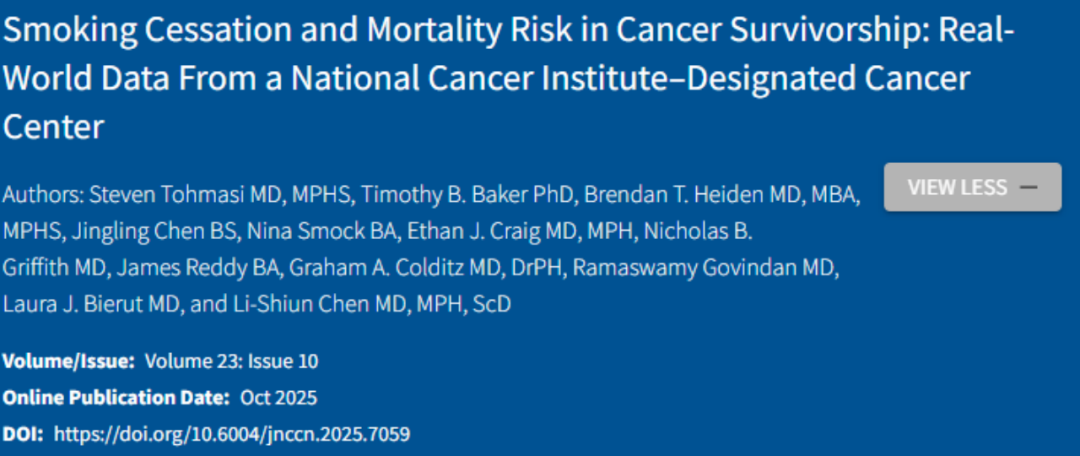
We all know that tobacco smoke contains 7000various chemical substances, among which at least 70are known carcinogens, such as polycyclic aromatic hydrocarbons, benzopyrene, nitrosamines, formaldehyde, arsenic, cadmium, etc.
Some of these carcinogens directly bind to DNA, triggering mutations. For example, the active intermediates formed after the metabolism of benzo(a)pyrene can damage DNAbases. Others interfere with the self-repair ability of cells, leading to the accumulation of mutations.
Some people have good innate genes and stronger cell maintenance and repair abilities, so they can live to be 90years old without getting cancer even if they smoke.
But for ordinary people who have been diagnosed with cancer, quitting smoking is the most critical part of cancer treatment and rehabilitation!
Data analysis reveals[1]:
① Compared to cancer patients who successfully quit smoking within6months, the death risk for continuous smokers is nearly doubled, increasing by97%!
② The two-year survival rate for patients who successfully quit smoking after being diagnosed with cancer is as high as 85.1%, while the two-year survival rate for patients who continue to smoke decreases by more than 10%, only reaching 74.7%.
③ In the analysis of patients with stage III, stage IV and advanced stage cancer, it was found that the mortality risk of cancer patients who continue to smoke is 2.11 times higher than that of quitters.
④ For patients who underwent surgery after being diagnosed with cancer, if they continue to smoke after surgery, their mortality risk is 4.41 times higher than those who successfully quit smoking during the perioperative period!
It is important to note that many people in daily life do not have a smoking habit, but they often encounter environments with second-hand smoke and third-hand smoke, and may suffer even greater harm! One-third of non-smoking adults are exposed to the world of second-hand smoke.

From a compositional perspective, second-hand smoke contains essentially the same harmful substances as first-hand smoke. However, in terms of the specific degree of harm, the concentration of certain toxic components in second-hand smoke is actually higher. For example, the carbon monoxide content in second-hand smoke is5times that of mainstream smoke, tar and nicotine reach3times that of mainstream smoke, and the content of strong carcinogens nitrosamines is even as high as50times that of mainstream smoke85>[2].
A follow-up study lasting for20years showed that the risk of cardiovascular disease among passive smokers even reached the level of daily smoking1-92times. The study also found that people who are exposed to secondhand smoke for 1-7 hours a week have an increased risk of myocardial infarction; When the exposure time exceeds12hours/weeks, the risk increase further increases to< H658>62%[3]。
Some patients may think that they already have a disease, so there's no need to quit smoking", but this is not the case!
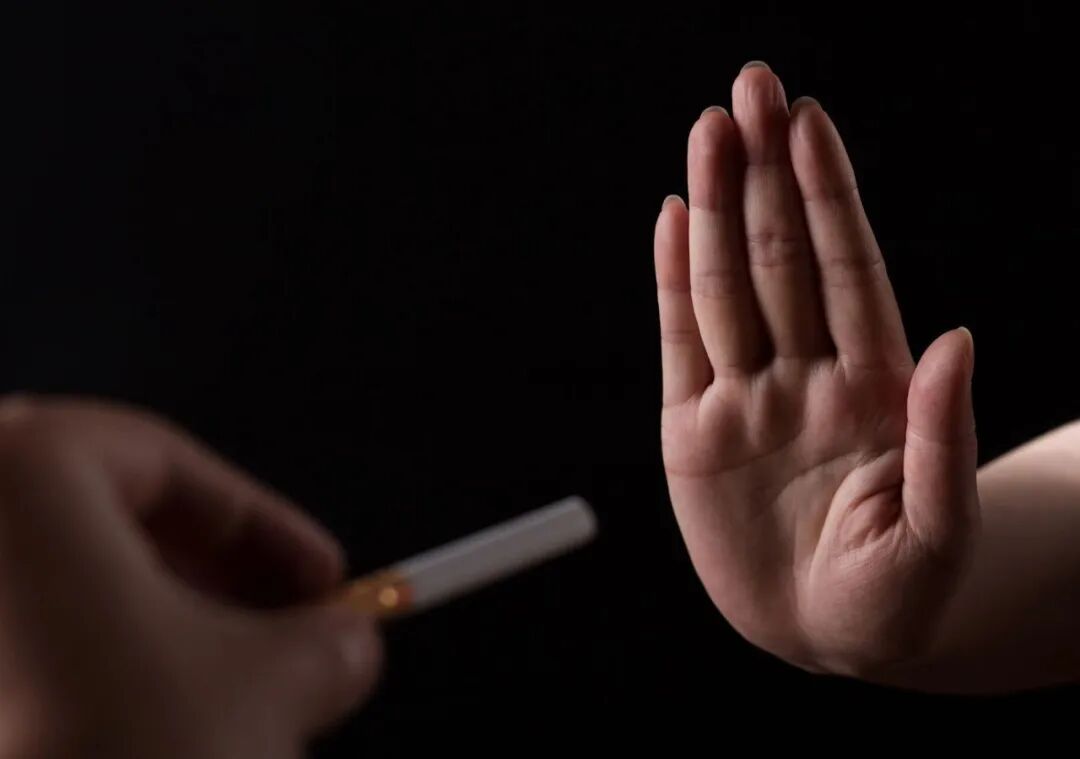
Research shows[4] that cancer patients who undergo smoking cessation intervention within 9 months after diagnosis can significantly improve their survival rates for various types of cancer.It is particularly noteworthy that patients who start quitting smoking within 6 months after diagnosis benefit the most, with the most pronounced improvement in their survival outcomes. If patients initiate a smoking cessation program within 6months after diagnosis and successfully quit smoking within 3months, 75% of the cases can achieve a survival extension of 1.8 years.
Lastly, I'll share a tip for quitting smoking: When you feel the urge to smoke due to postoperative pain or chemotherapy anxiety, first perform 3 rounds of "4-7-8 breathing" (inhaling for 4 seconds, holding for 7 seconds, and exhaling for 8 seconds). Most cravings will subside within 90 seconds.
The cancer cells may have taken the lead, but the cigarette in your hand is just giving your opponent a boost to continue “cheering”. Put it down, as soon as20minutes, the heart rate begins to decline.3months later, the immune system reassembles. Don't let "Anyway,has already been diagnosed with cancer" become a self giving prophecy, treat today as the0day, and take the comment section as a witness - let's stretch our lifeline together, and continue to stretch it. <Remember to forward it to family members in need< H250>~】
Reference source:< H266>
[1]Tohmasi S, Baker TB, Heiden BT, et al. Smoking Cessation and Mortality Risk in Cancer Survivorship: Real-World Data From a National Cancer Institute-Designated Cancer Center. J Natl Compr Canc Netw. 2025; 23(10):e257059. doi:10.6004/jnccn.2025.7059
[2]Mattias, Ö berg, and, et al. Worldwide burden of disease from exposure to second-hand smoke: a retrospective analysis of data from 192 countries[J]. Lancet, 2011.
[3]Teo K K , Ounpuu S , Hawken S ,et al. Tobacco use and risk of myocardial infarction in 52 countries in the INTERHEART study: a case-control study.[J]. Lancet, 2007, 368(9536):647-658.
[4]Cinciripini PM, Kypriotakis G, Blalock JA, et al. Survival Outcomes of an Early Intervention Smoking Cessation Treatment After a Cancer Diagnosis. JAMA Oncol. Published online October 31, two thousand and twenty-four doi:10.1001/jamaoncol.2024.4890.
Click to view past science popularization


Address: Room 1101 (Unit 101), 11th Floor, Building 1, No. 7 Courtyard, Kexueyuan Road, Life Science Park, Changping District, Beijing
Phone:010-8265 9866
Email:lehemedneo@hotmail.com