About Lehe
乐于心,和与众,与己乐,与人和; 心宽念纯,百病无生。


乐于心,和与众,与己乐,与人和; 心宽念纯,百病无生。

▲Click on the blue text to follow us< H1>
Tumor metastasis is an important link in the malignant development of tumors and a major reason for the failure of tumor treatment. According to statistics, metastasis causes the majority of cancer-related deaths (approximately 90%). Previous articleClick here for the link :90% of cancer-related deaths are caused by metastasis! What is cancer metastasis?
What do we know about transfer? How did the transfer occur? What are the hazards of transfer? In this article, we will continue to explore the topic of transfer. What are the research directions and drugs for transfer? What are the current problems or limitations in treating metastatic cancer? Scientists' research on controlling metastasis focuses on understanding which transfer step is most suitable for treatment. At present, the understanding of tumor metastasis is still in the further deepening stage!
Metastasis is an inefficient process, yet its harm is not low
Metastasis is a highly inefficient process, and cancer cells during metastasis may die for various reasons, including:
(1) Cells are usually tightly connected to adjacent cells and the surrounding protein network, and detachment from the surface of other cells can lead to cell death, and tumor cells are no exception.
(2) Compared to cells that usually exist in the lymphatic system or blood system, cancer cells are usually quite large. When they pass through blood vessels, they may be damaged or stuck, leading to cell death.
(3) Cancer cells may be recognized and destroyed by cells of the immune system.
Moreover, it is important to understand that even if cancer cells do not die, they do not necessarily form tumors. Cells may survive far away from the original tumor site without replicating and reproducing, nor will they form metastatic tumors.
However, the reason why metastasis is so common and can lead to most cancer-related deaths is that up to millions of cells leave the tumor every day! Even if only a small fraction of cells leaving the tumor can survive and form new tumors, the attempt of such a large number of tumor cells to metastasize means that there is a high probability that cancer cells will grow in distant locations at some point.
Increased immunosuppression in the tumor microenvironment of metastatic tumors
In some cases, tumor cells invade external tissues but cannot stabilize and proliferate within them. In fact, they remain dormant. What causes these cells to fail to successfully form metastatic tumors? They may not be able to promote adequate angiogenesis or reproduce, and either of these could be due to a lack of appropriate interaction between the tumor cells and their new environment. These tumor cells require more genetic mutations to overcome the difficulties encountered in the new tissue. The time required for this process can range from a few months to several years or even decades.
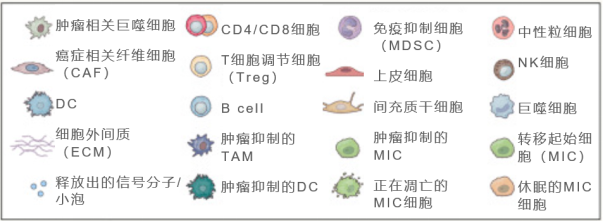
Figure 1. Metastatic Tumor Microenvironment1
The composition of the tumor microenvironment (TME) is crucial for tumor growth and progression. However, deciphering the mechanism of interaction between the tumor and its environment is extremely challenging! The abundance of growth factors, cytokines, and other factors, as well as numerous signaling pathways involved in communication between these two entities, make this mechanism difficult to understand, and almost any outcome is possible. Therefore, the importance of the tumor microenvironment is evident, and an increasing number of studies have found that the environment of immune cells and the expression of immune regulatory receptors in the TME become more suppressed in metastatic tumors. It is believed that with more understanding, there will be more targeted treatment options for the tumor environment and combined tumor-environment therapies.
What are the current directions for drug research targeting metastasis?
Metastatic cancers such as breast cancer, prostate cancer, pancreatic cancer, colorectal cancer, and melanoma are currently research hotspots. Antitumor metastasis drugs are mainly divided into antibody drugs, small molecule inhibitors, peptides, and nucleic acids according to their molecular structure. Based on different mechanisms of action, they are further classified into the following categories:
(1) Anti-angiogenic therapy: Since metastasis relies on the growth of new blood vessels in primary and secondary tumors, drugs that inhibit angiogenesis, such as some angiogenesis factor inhibitors, can suppress metastasis. Currently, the combination of anti-angiogenic drugs with chemotherapy/radiotherapy is the most effective treatment method. Unfortunately, many tumors become resistant to anti-angiogenic therapy, so this is usually not a long-term solution.
(2) Metastasis inhibitors: Recent studies have identified a group of molecules that induce metastasis without affecting primary tumor growth. These molecules can inhibit cell death when cell adhesion is lost or enhance the ability of cells to migrate through the stroma. These molecules are crucial for different stages of metastasis. Inhibitors targeting these molecules are called metastatic suppressors, such as cell adhesion molecule antagonists and metalloproteinase inhibitors. Researchers hope that these molecules can become targets for anti-cancer/anti-metastasis therapy. In 2023, China Pharmaceutical University published a paper in Nature, reporting the discovery of a TRPV4 inhibitor, GL-V9, which significantly inhibits liver cancer metastasis. Preclinical studies have shown its strong anti-metastatic effect and low toxicity. This suggests that TRPV4 is a promising therapeutic target for preventing cancer metastasis, which requires further clinical research validation.
(3) Chinese herbal medicine: Alkaloids in compound prescriptions of Chinese herbal medicine, such as ginsenosides and paclitaxel, are believed to enhance immune function and may also have anti-metastatic effects.
(4) Others: In addition, immune-enhancing drugs or biologics, including interferon (IFN), short peptides, vaccines, IL-2, tumor necrosis factor, plant polysaccharides, and antioxidants, are also considered anti-metastatic drugs.
Current and Emerging Treatment Strategies for Metastatic Tumors
On April 13, 2023, Professor Karuna Ganesh of the Memorial Sloan Kettering Cancer Center, as the corresponding author, published a review article titled "Metastasis" in the top-tier journal Cell (IF score: 66.85), which comprehensively summarizes the latest advancements in tumor metastasis research.
Currently, there are three scenarios for the treatment of metastatic diseases: (1) When metastatic disease is suspected to be micrometastatic in the (neo-)adjuvant therapy setting, it cannot be detected by standard imaging and screening techniques, nor can it be intervened with conventional treatment methods. (2) Although multi-organ metastasis is largely incurable, selective local treatment for oligometastases can prolong life to some extent, such as surgical resection, radiotherapy, ablation, interventional therapy, etc., targeting metastatic lesions. (3) Multi-organ metastatic diseases are typically treated with systemic therapy, including chemotherapy, targeted therapy (such as small molecule inhibitors, antibodies, or antibody-drug conjugates), and immunotherapy.
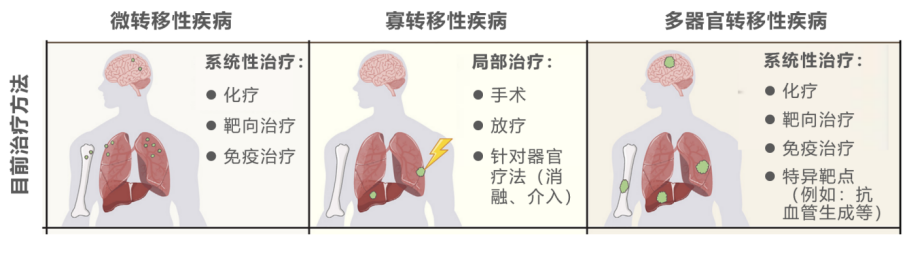
Figure 2. Current treatment strategies for metastatic tumors< H294>【2】
Currently, although there are treatment plans for the second and third situations, the efficacy is often unsatisfactory. For the first situation, there is currently no good solution. In micrometastasis, the initiating cell (MIC) and immune surveillance are in a dynamic balance. Proliferating cells are often cleared by tissue resident or circulating immune cells, while dormant cells evade immune destruction. In oligometastasis, small tumors are infiltrated by tumor microenvironment (TME) resident cells and recruit immune cells. In multi organ metastasis, TME becomes increasingly immunosuppressive, capable of clearing tumor reactive immune cells or putting them into an immunosuppressive state.
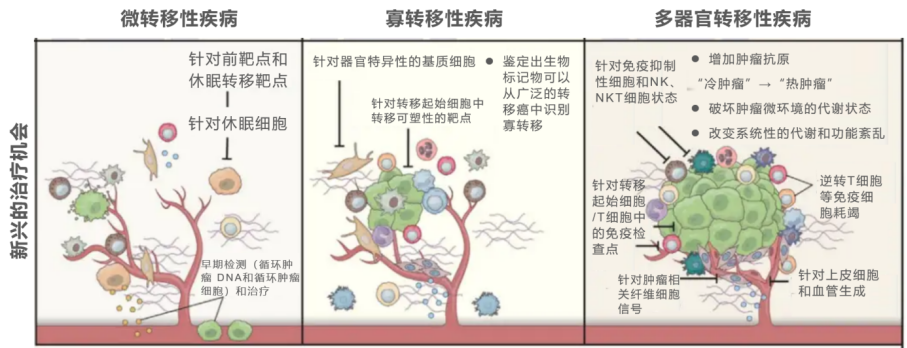
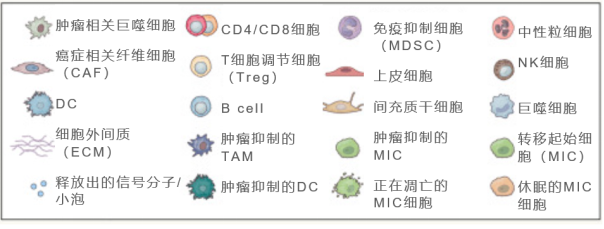
Figure 3. Emerging Treatment Opportunities for Metastatic Tumors[2]
How to eliminate these possible micro metastases while avoiding harm caused by overtreatment has become a common challenge for doctors and patients today. Among all emerging treatment methods, adoptive immune cell therapy has attracted attention due to its ability to help improve the body's immune system, completely eliminate residual "zombie" cells and small metastatic lesions in the body. Especially unmodified natural immune cells, they can rebuild and enhance the patient's own immune function, comprehensively identify, search, and kill diseased cells, effectively prevent tumor recurrence and metastasis, without causing damage to the body. The v-NKT cell therapy discovered by Zhang Minghui's experimental team belongs to the adoptive cell therapy in immunotherapy, which has the characteristic of broad-spectrum killing of tumor cells. Therefore, after the reduction of tumor burden (such as after surgery or radiotherapy and chemotherapy treatment), it is possible to effectively remove tumor cells that may remain in the body but cannot be detected by existing technological means, thereby effectively preventing tumor recurrence and metastasis.
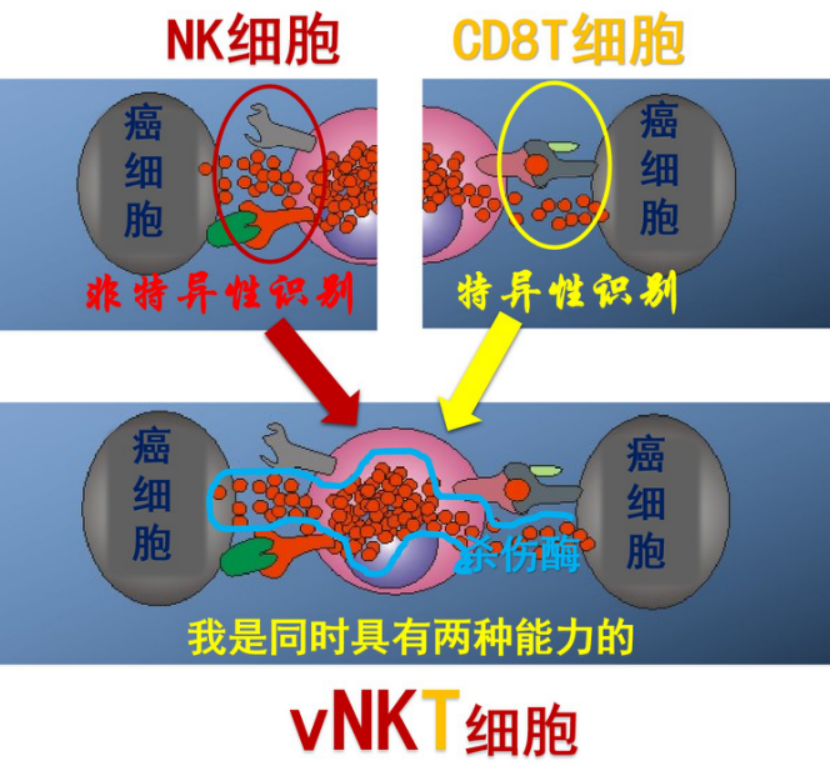
Figure 4. Schematic diagram of v-NKT cell function
Moreover, in the tumor microenvironment, an increase in the number of MDSCs (immunosuppressive cells) can produce arginase, TGF - β, NO, or IL-10, thereby inhibiting anti-tumor immune responses. V-NKT cells can also kill these MDSCs with immunosuppressive effects, achieving the effect of improving the anti-tumor microenvironment and eliminating tumors[3]. Therefore, vNKT cell reinfusion provides a new treatment strategy for tumor patients who may have micro metastasis or have already undergone metastasis, which not only treats and prevents diseases but also has no side effects!
Immunotherapy for tumors has become a powerful tool in the fight against cancer, and the therapeutic effect of adoptive cell immunotherapy has become increasingly clear. At the same time, the body has a higher tolerance to these immunotherapy methods than traditional chemotherapy drugs. Of course, solid basic research is the key to the clinical application of tumor cell immunotherapy. The continuous expansion and exploration of indications for tumor cell immunotherapy are driving the rapid development of the clinical tumor cell immunotherapy field, and we look forward to achieving the ultimate goal of persistent cure for metastatic cancer!

Contact Us
Scan QR Code
Communicate with Professor Zhang Minghui's team< H16>
Click on the image to view previous exciting content< H33>


Reference source:< H71>
【1】Chaffer CL, Weinberg RA. A perspective on cancer cell metastasis. Science. 2011; 331 (6024): 1559-1564.
[2] Gerstberger, Stefanie et al. "Metabolism." Cell vol. 186,8 (2023): 1564-1579. doi: 10.1016/j.cell.2023.03.003
[3] Li, Z., Y. Wu, C. Wang and M. Zhang. (2019)."Mouse CD8 (+) NKT like cell exert dual cytotoxicity against mouse tumor cells and myeloid derived suppressor cells."Cancer Immunol Immunother 68 (8): 1303-1315.
Written by: Cao Tingting
Reviewed by:Qiao Jiacheng,Wang Ying, Gao Chen
Edited/typeset:Zhao Tuantuan

Address: Room 1101 (Unit 101), 11th Floor, Building 1, No. 7 Courtyard, Kexueyuan Road, Life Science Park, Changping District, Beijing
Phone:010-8265 9866
Email:lehemedneo@hotmail.com