About Lehe
乐于心,和与众,与己乐,与人和; 心宽念纯,百病无生。


乐于心,和与众,与己乐,与人和; 心宽念纯,百病无生。


Every 20newly diagnosed cancerpatients among women, there are 1personwho is diagnosed with breast cancer, and every 70women who died of cancer, there are 1person who may have died from breast cancer[1], breast cancer has become the second most common malignant tumor among women in China, after lung cancer, with the highest incidence rate. Everyone needs to pay attention to this for themselves, their wives, and their mothers.


Which "breast" does breast cancer prefer?
Although breast cancer affects a wide range of women, multiple large-scale studies in recent years have found that breast cancer does not "affect everyone equally", but rather has a "special preference" for certain specific types of breasts.
1、 The British Medical Journal (The BMJ
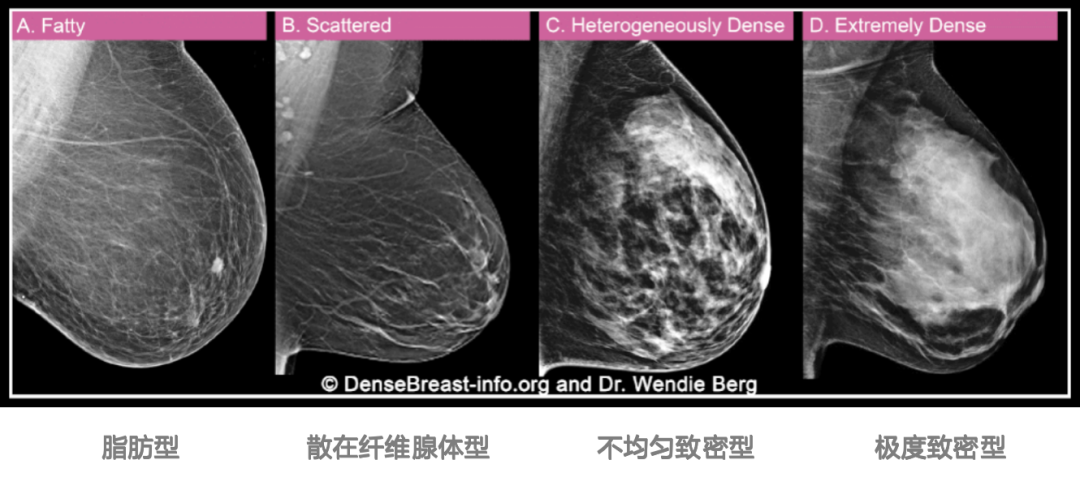
According to a survey conducted by the Chinese Center for Disease Control and Prevention, the proportion of dense breasts among Asian women is as high as over 60%[3], which means breast cancer is more unfriendly to Asian women. Since glandular tissue is the main site of breast cancer occurrence, and there is more glandular tissue in dense breasts, the risk increases accordingly; in addition, the glandular tissue in dense breasts can mask the imaging characteristics of early-stage tumors, which is also an important reason why some women's physical examination reports show “no abnormalities found” but are later diagnosed with advanced breast cancer.
2、 Asymmetric
In fact, slight asymmetry in the contour of the breasts on both sides is a common phenomenon.Due to factors such as developmental hormones, asymmetrical limb activity, long-term lateral sleep, and lactation,the breasts may grow larger and smaller.
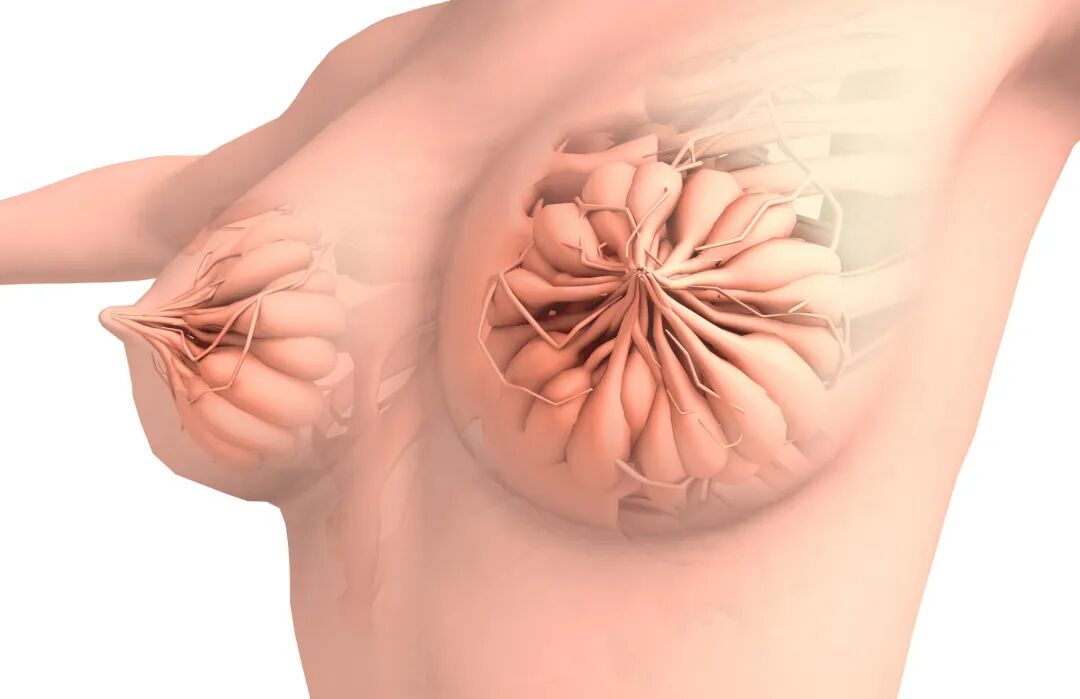
The research published by medical imaging experts from the University of Liverpool in the UK in the journal breast cancer Research found that:every 100ml difference in the size of women's two breasts increases the risk of breast cancer by 50%.
Simultaneously! Sudden asymmetry, also requires vigilance !
For example, sudden changes in breast size or shape may be related to estrogen levels, breast density, metabolic products, etc., and can increase the risk of breast cancer.
How to keep "high-risk breasts" away from cancerization?
1. Self-screening
40-70 years old: Every 1-2 years, undergo 1 time of breast Xray examination, For dense breasts (breast Xray suggests the gland is c type or d type), it is recommended to combine with B ultrasound examination; For individuals aged 70 and above, a mammography examination should be conducted every 1-2 years. [4]

2. Strategic Upgrade
① Weight Control
After the age of 35, women who gain more than 10 kilograms face a significantly increased risk of breast cancer, especially among premenopausal women. After the age of 35, a weight gain of 5-9.9 kilograms increases the risk of breast cancer by 89%; For women with a weight gain of >10 kilograms, the risk of breast cancer increases by 123% [5]. It is not difficult to see thatWeight management after the age of [specific age] is a critical window for preventing breast cancer. It is important to pay attention to the relationship between the two. By adopting a healthy diet, moderate exercise, and maintaining a healthy weight, the earlier you start paying attention, the better.
② Avoiding hormones
A Harvard University study found that hormone replacement therapy during perimenopause can directly contribute to the occurrence and development of breast cancer. Estrogen can induce DNAdouble-strand breaks in the region where estrogen receptors are located, leading to the amplification of oncogenes such as HER2 and CCND1, driving the occurrence of breast cancer[6].
Avoid taking hormone drugs for a long time, especially for women in perimenopause. It is important to use drugs under the guidance of a doctor, and do not blindly take hormone drugs or health products to interfere with endocrine balance.
③ Quit smoking and drinking
Smoking and drinking can increase the risk of breast cancer through various pathways such as inflammation and metabolic pathways, and their combined effects are even more harmful. Quitting smoking and limiting alcohol consumption are necessary measures to reduce the risk of breast cancer, and women with a family history should strictly limit them.
④ A good mood
Women often say, "Endure for a moment, and you may get ovarian cysts; take a step back, and you may get breast hyperplasia." This shows the harm long-term suppression of negative emotions can have on women's health. Conversely, maintaining a good mood can build an invisible defense line for breast health through multiple mechanisms such as regulating hormones, enhancing immunity, and improving microbiota, and every smile is like recharging your life.
⑤ Timely childbirth
Timely childbirth (especially35Before the age of birth), breastfeeding, and good maternal and child health care canH186>Changing the Breast through Fertility"Fate".
Reference sources: [1]Kim J, et al. Global patterns and trends in breast cancer incidence and mortality across 185 countries. Nat Med. 2025 Feb 24. [2]Boyoung Park, Yoosoo Chang, Seungho Ryu, et al. Trajectories of breast density change over time and subsequent breast cancer risk: longitudinal study. The BMJ. 2024; 387 doi: https://doi.org/10.1136/bmj-2024-079575 [3]Xue Ke, Xu Hui, Yue Baorong, Lin Lin, Yang Yunfu, Ding Yanqiu, Ye Zhaoxiang. Preliminary investigation of female breast characteristics based on cone-beam CTthree-dimensional imaging. Chinese Journal of Radiation Hygiene , 2023, 32(6): 618-625. DOI: 10.13491/j.issn.1004-714X.2023.06.004. [4]Guidelines and specifications for breast cancer diagnosis and treatment issued by the Chinese Anti-Cancer Association (2024 edition)(2024version) [5]Katherine De la Torre, Woo-Kyoung Shin, Hwi-Won Lee, et al. Weight gain after 35 years of age is associated with increased breast cancer risk: findings from a large prospective cohort study, Cancer Biology & Medicine (2024). DOI:10.20892/j.issn.2095-3941.2024.0172 [6]Lee J J-K, Jung Y L, Cheong T-C, et al. ERα-associated translocations underlie oncogene amplifications in breast cancer[J]. Nature, 2023.

Immunity science popularization, vegetarian diet, health live broadcast
Add a small assistant and join Professor Zhang's science popularization group to learn together
Founder of Lehe New Medicine
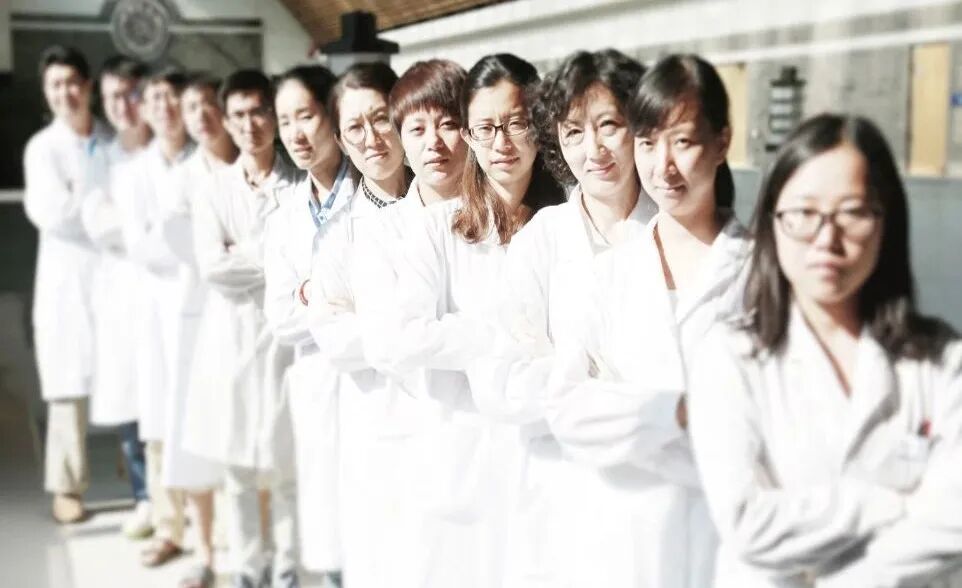
Professor Zhang Minghui, a PhD in Immunology from Tsinghua University School of Medicine, has led a research team for over 20 years since the discovery of vNKT cells in 2002. They have accumulated treatment experience in over 700 cases of solid tumors, covering almost all common solid tumors. The research results fully demonstrate the great value of vNKT cells in the treatment of solid tumors.
It is suitable for postoperative patients with high pathological malignancy or a risk of recurrence; patients whose tumors have been basically controlled but not cured through conventional treatments such as chemotherapy, radiotherapy, and targeted therapy; patients with persistent high carcinogenic factors; and patients intolerant to radiotherapy and chemotherapy. If these patients do not receive effective follow-up treatment after traditional anti-tumor therapy, recurrence, metastasis, or reoccurrence of tumors will be highly probable. In this case, vNKT cell therapy is an ideal follow-up treatment method, which can significantly improve the prognosis of patients.
Click on the image to view the exciting content from previous issues


Address: Room 1101 (Unit 101), 11th Floor, Building 1, No. 7 Courtyard, Kexueyuan Road, Life Science Park, Changping District, Beijing
Phone:010-8265 9866
Email:lehemedneo@hotmail.com