About Lehe
乐于心,和与众,与己乐,与人和; 心宽念纯,百病无生。

乐于心,和与众,与己乐,与人和; 心宽念纯,百病无生。


What is Red No. 3?
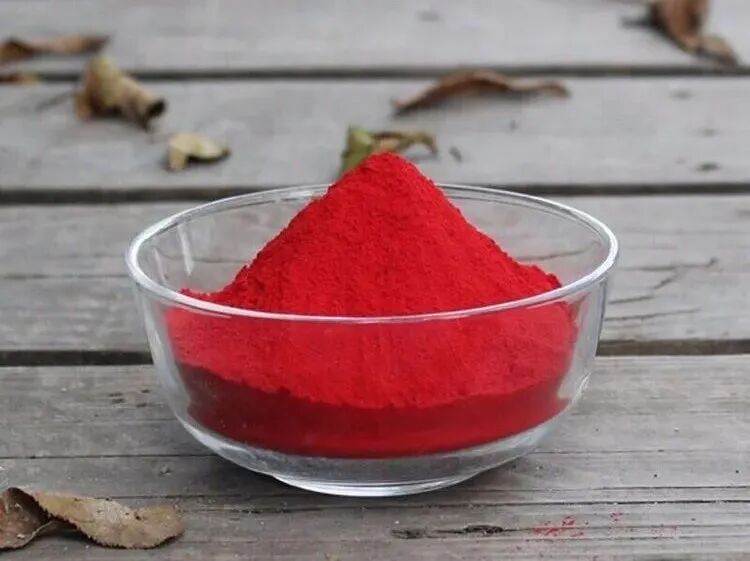
Code Red No. 3, also known as erythrosine (FD&C Red No. 3), is a synthetic colorant that imparts a vibrant cherry red hue to food or beverages, visually enhancing their appeal. It is widely used in baked goods, pastries, candies, soft sweets, fruit juices, baby food, cakes, and certain vitamin soft candies or oral medications. According to a database from an environmental health organization, erythrosine is present in nearly 3000 types of food
Why is erythrosine banned?
In fact, this is not the first time this pigment has been banned. As early as 1990, the United States had already banned erythrosine in cosmetics, but it was only recently removed from the food supply chain.
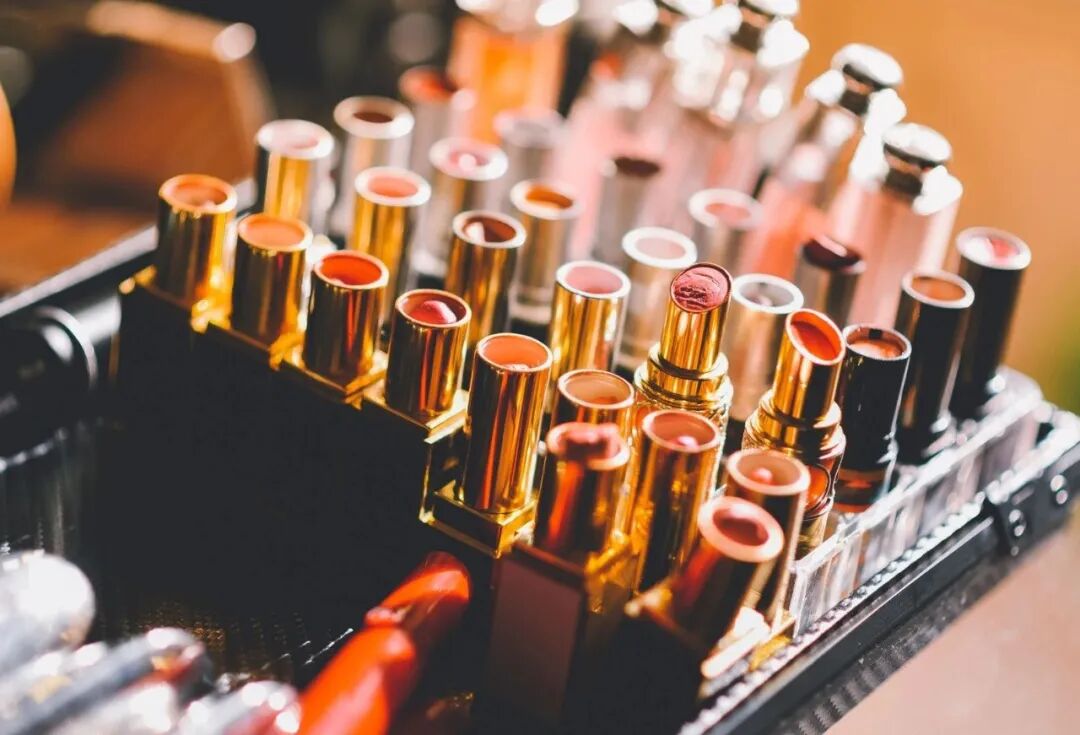
Because multiple animal experiment studies conducted by the FDA have shown that this pigment is prone to causing male rats to develop cancer, especially a significant increase in the incidence of thyroid cancer in thyroid cancer. In addition, studies have found that this synthetic food coloring pigment can also potentially affect children's neurobehavior, making them difficult to concentrate, suffer from hyperactivity disorder, and exhibit behavioral problems.
Are carcinogenic pigments present in our lives?
According to the current GB2760-2024 "National Food Safety Standard - Standard for the Use of Food Additives", erythrosine and its aluminum lake are used as colorants in various food categories with limited amounts. These include preserved fruits, pastries, meat sausages, fruit and vegetable juice (syrup) drinks, and puffed foods, totaling 14 categories, with usage levels ranging from 0.015 g/kg to 0.1 g/kg. [2]
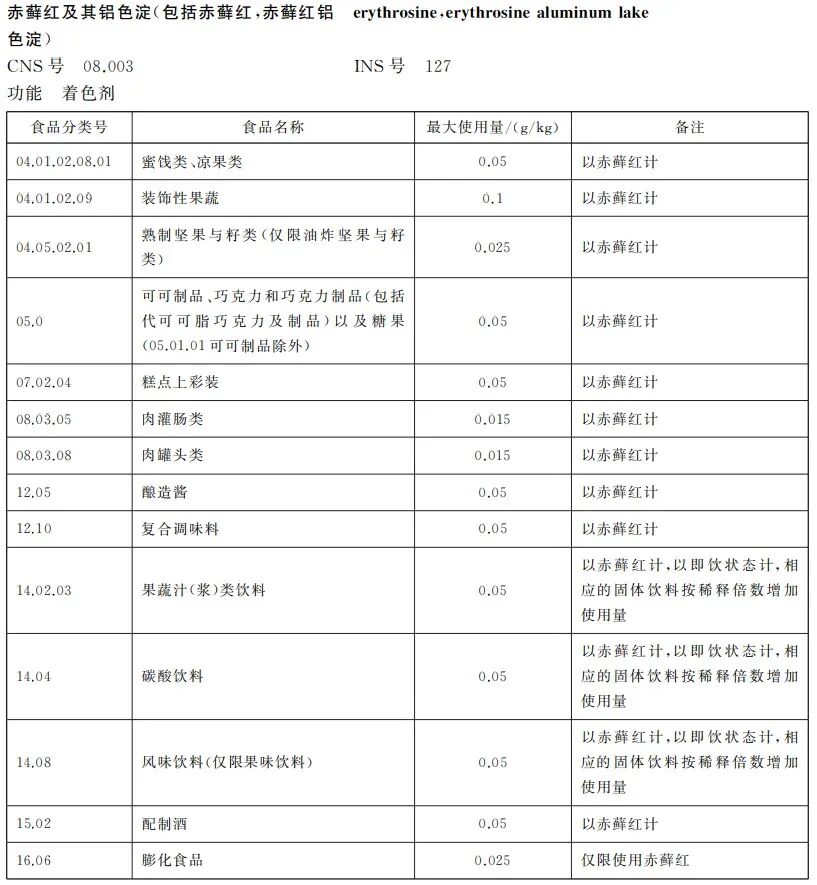
▲ Photo Source: National Food Safety Standard Data Retrieval Platform
Although erythrosine is used in limited quantities in China, it has not been banned yet. To avoid this carcinogenic pigment, when shopping forfoods with attractive red colors, please be sure to take a closer look!
Check the ingredient list!
I also visited supermarkets and found that many products have replaced the red pigments they used with natural“beet red” and “red yeast red”, but some still use “erythrosine”.
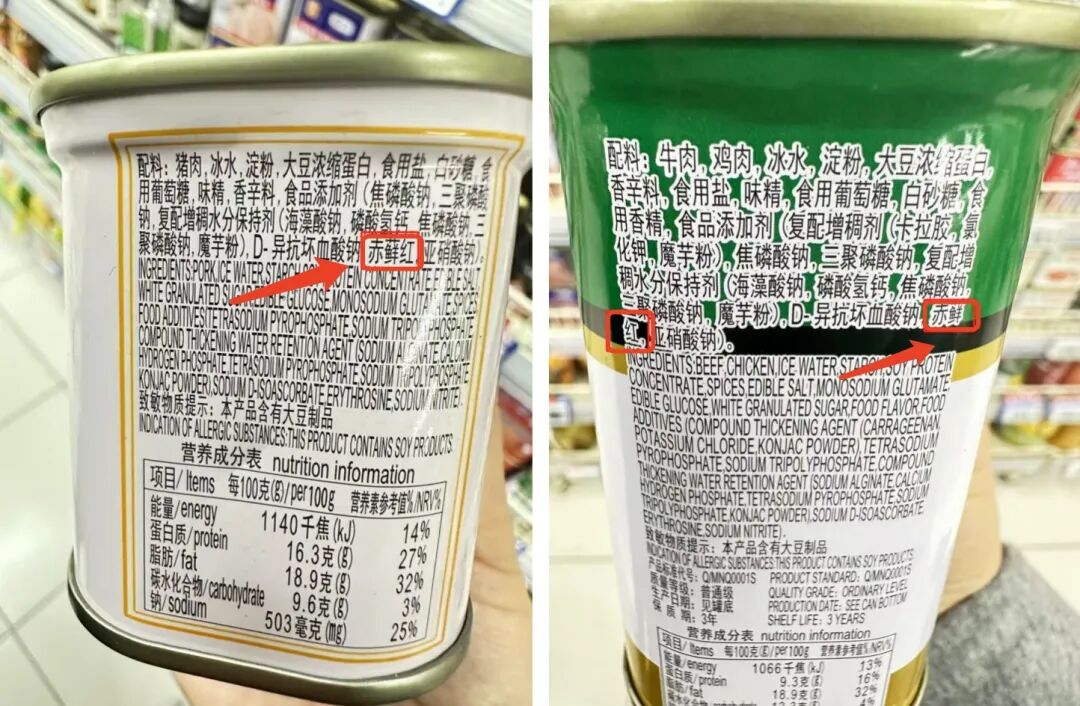
In addition to snacks and beverages, which are commonly considered heavy users of erythrosine, there are also some meats such as sausages, cured sausages, bacon, and luncheon meats that may also use erythrosine in pursuit of a “rosy” appearance.
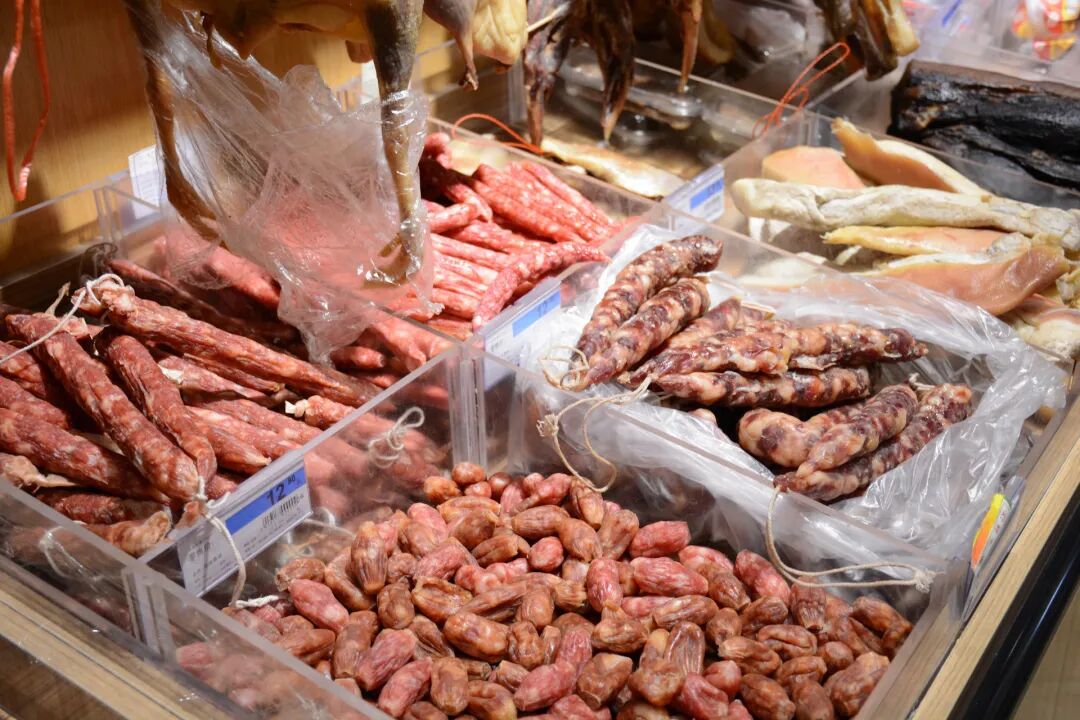
Check your family's snack cabinet and forward this reminder, perhaps you can avert a health crisis that has been lurking for many years for your family and friends.
Reference source:
[1]FDA to Revoke Authorization for the Use of Red No. 3 in Food and Ingested Drugs | FDA
[2]GB2760-2024 National Food Safety Standard for Food Additives
Immunity science popularization, vegetarian diet, health live broadcast
Add a virtual assistant and join Professor Zhang's science popularization group to learn together
Founder of Lehe New Medical
Professor Zhang Minghui, who holds a PhD in Immunology from Tsinghua University School of Medicine, has led a research team for over 20 years since the discovery of vNKT cells in 2002. They have accumulated treatment experience in over 700 cases of solid tumors, covering almost all common solid tumors. The research results fully demonstrate the great value of vNKT in the treatment of solid tumors.
Applicable to postoperative patients with high pathological malignancy or a risk of recurrence; patients whose tumors have been largely controlled but not cured through conventional treatments such as chemotherapy, radiotherapy, and targeted therapy; patients with persistent high carcinogenic factors; and patients intolerant to radiotherapy and chemotherapy. If these patients do not undergo effective follow-up treatment after traditional anti-tumor therapy, recurrence, metastasis, or re-emergence of tumors is highly probable. In such cases, vNKT cell therapy serves as an ideal follow-up treatment, significantly improving patient prognosis
Click on the image to view past exciting content


Address: Room 1101 (Unit 101), 11th Floor, Building 1, No. 7 Courtyard, Kexueyuan Road, Life Science Park, Changping District, Beijing
Phone:010-8265 9866
Email:lehemedneo@hotmail.com