About Lehe
乐于心,和与众,与己乐,与人和; 心宽念纯,百病无生。

乐于心,和与众,与己乐,与人和; 心宽念纯,百病无生。


Cancer treatments include surgery, radiotherapy, chemotherapy, targeted therapy, traditional Chinese medicine, and immunotherapy......Patients often try various treatments in the hope of solving the "big problem" of cancer as soon as possible.
But have you ever wondered under what conditions the human body is most capable of eliminating cancer cells?
While patients bravely endure the coldness of the surgical blade and the torment of chemotherapy drugs, many often overlook the silent struggle deep within their hearts, ignoring the medicine every cancer patient should take, and the absence of this medicine will not only shut down the body's anti-cancer genes, but also increase the metastatic ability of cancer4fold, and affect the treatment outcome. [1-3]

The pain brought by cancer to patients is not onlyreflected in thephysical aspect, but also in the psychological aspect, such as anxiety and depression, which are equallyuncomfortable.

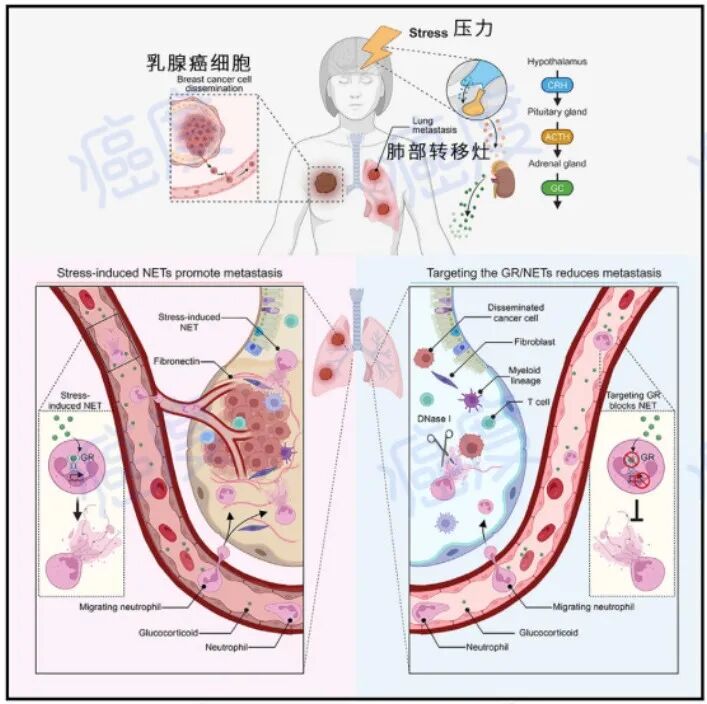
In February 2025, a study covering 210,000 cancer patients revealed [4] that among cancer recovery patients, the incidence of depression was 33.16%, and the incidence of anxiety was 30.55%. During the COVID-19 pandemic, the incidence of depression and anxiety among cancer patients further rose to 43.25% and 52.93%, respectively. Among lung cancer patients, 33% to 77.2% report experiencing symptoms of depression, anxiety, and other related conditions 1、 Mental stress can shut down anti-cancer genes< H364>[1] When a person is under high mental stress, the body will activate the "combat mode" (sympathetic nervous system excitation), releasing a chemical substance similar to a "stress hormone" called norepinephrine. This chemical substance binds to the norepinephrine receptorsADRB2on cancer cells, activating the internal signaling chain of cancer cells and shutting down theAlkbh5genes responsible for removing harmful substances from cancer cells. Without this security system, cancer cells are even more difficult to kill 2、 Psychological stress can promote the spread of cancer< H422>[2] Cancer Cell A published study shows that chronic stress can affect glucocorticoid levels, leading to the formation of a sticky network structure in neutrophils, which is a favorable environment for cancer cell metastasis. This conclusion has also been validated in experimental mice, where cancer spreads faster and more violently under pressure.Metastasis increases4. Mechanisms related to cancer metastasis caused by stress< H475> 3、 Emotional distress affects treatment outcomes As early as2019A study published in Nature Medicine confirmed that[5],Mental stress can reorganize dendritic cells, inhibit anti-tumor immune responses, and ultimately...Causes decreased efficacy of chemotherapy and immunotherapy. The Yellow Emperor's Classic of Internal Medicine states: “All diseases originate from the mind, and treating the mind is the first step in healing”. Cancer is a physical illness, but it is also a psychological ailment. Unhealthy emotions are not mere pretense. Your positive attitude is truly invaluable"Prescription for the Heart Medicine", you need to proactively prepare it: 1, acknowledge the existence of emotions such as: sadness, fear, anger...theseemotionsare all normal, don't blame yourselffor being 'not strong enough'. Allow yourselftofeel, as it is the first step to healing. 2、 Don't bear it alone * Communicate your feelings and needs withfamily and friends:Sincerely, even if it's just listening. * Patient groups: Similar experiences bring the deepest empathy and understanding. * Professional psychological support:This is the key prescription! Psychologists, psychiatrists, and oncology psychologists in hospitals can provide professional assistance such as cognitive behavioral therapy (CBT), acceptance and commitment therapy (ACT), and mindfulness-based stress reduction (MBSR). 3, allowing the body to the mind to “recharge *. Gentle exercise: activities such as walking, yoga, and Tai Chi can stabilize emotions and improve sleep. * Regular sleep schedule: Ensuring sufficient and regular sleep is the cornerstone of emotional stability. * Healthy diet: Balanced nutrition provides energy for both the body and the mind. 4 Focus on the present moment and reduce anxiety * Mindfulness meditation: Take a few minutes every day, focus your attention on your breath or physical sensations and , bringing your thoughts back to the present moment and reducing anxiety about future uncertainties. * Cultivate simple hobbies: listening to music, reading, gardening, painting and other small hobbies, immerse yourself in them and temporarily forget your troubles. In summary, the battlefield of anti-cancer is not only about cold surgical knives and chemical agents. The truly lasting battle lies in awakening the unyielding belief deep within your heart ——that is a scientifically proven weapon, the clarion call of immune cells, and every ray of hope that life strives for itself. References: [1] Chen, Z., Zhou, Y., Xue, C. et al. Psychological stress-induced ALKBH5 deficiency promotes tumour innervation and pancreatic cancer via extracellular vesicle transfer of RNA. Nat Cell Biol (2025). https://doi.org/10.1038/s41556-025-01667-0 [2] Chronic stress increases metastasis via neutrophil-mediated changes to the microenvironment, Cancer Cell (2024). [3] Zeng, Y., Hu, CH., Li, YZ. et al. Association between pretreatment emotional distress and immune checkpoint inhibitor response in non-small-cell lung cancer. Nat Med (2024). https://doi.org/10.1038/s41591-024-02929-4 [4] Addisu Getie, Manay Ayalneh, Melaku Bimerew et al. Global prevalence and determinant factors of pain, depression, and anxiety among cancer patients: an umbrella review of systematic reviews and meta-analyses BMC Psychiatry. 2025 Feb 19; 25(1):156. doi: 10.1186/s12888-025-06599-5 [5] Yang, H., Xia, L., Chen, J. et al. Stress–glucocorticoid–TSC22D3 axis compromises therapy-induced antitumor immunity. Nat Med 25, 1428–1441 (2019). https://doi.org/10.1038/s41591-019-0566-4 Click to view past exciting content








Address: Room 1101 (Unit 101), 11th Floor, Building 1, No. 7 Courtyard, Kexueyuan Road, Life Science Park, Changping District, Beijing
Phone:010-8265 9866
Email:lehemedneo@hotmail.com